The 1925 Arcturus Expedition’s Women Staff

This entry is post 6 of 21 in the ongoing series Isabel Cooper

The picture below is a press photo from July 1925 showing the five women scientists and artists who staffed the Arcturus Expedition led by William Beebe, February to July 1925. My grandmother, Isabel Cooper, is at the right.

Marie P. Fish, Ruth Rose, Helen Tee Van, Lillian Segal, and Isabel Cooper, July 1925, upon their return from a six-month scientific expedition on the S S Arcturus to the Sargasso Sea, Panama, and the Galapagos Islands. They are holding a stuffed albatross

More about the five women
A lot more about Isabel Cooper may be found found here. More about each of Isabel’s Arcturus colleagues is in this post from a few years ago. Also, each of the five has an Wikipedia entry. Isabel’s is here.

The S S Arcturus and the expedition

The wooden steam yacht S S Arcturus, fitted out for oceanographic study, left New York on February 10, 1925 and sailed into the Atlantic Ocean. It found its way to the mid-ocean Sargasso Sea where explorer and naturalist William Beebe (1877-1962) and his staff sampled water and sea creatures at various depths.

Gear on the ship could sample as deep as three miles. Doing so meant spooling out a half-inch cable from where it was wound in drums for three hours. It took three more hours to bring up the sample. The women artists and ichthyologists aboard set to analyzing and illustrating the samples immediately. Here is a post on Isabel Cooper’s work as a ship-board scientific illustrator on the Arcturus Expedition.

The ship discovered some of the first (very) deep sea fish species. One of the reasons to have artists along was that color photography had not yet been perfected, and fish could change in color, shape, and condition once brought out of the water, an issue particularly for fish evolved to live at extreme deep-sea atmospheric pressures. So the artists painted and drew them immediately on the ship.

The expedition continued to Panama, and passed through the Panama Canal, sailing into the Pacific Ocean to the Galapagos Islands for further exploration. It returned to New York City at the end of July 1925.

Why all the women?

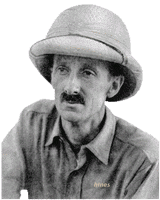
William Beebe in 1925

William Beebe favored hiring women for his tropical research stations and ship expeditions. My grandmother, Isabel Cooper, worked for him in the late 1910s through much of the 1920s.

Hiring women and recognizing them for their professional expertise was not typical then. I’ve often wondered why Beebe not only hired women, but seemed to prefer to do so. It’s hard to avoid wondering whether Beebe also had a romantic interest in some of the women.

I’ve posted before on Beebe and the women he employed in this post: “I let too many girl pictures get by me”. But I think there is more to explore.

Prior to the Arcturus Expedition, William Beebe gave an above-board reason to employ women staff. He noted that he “preferred working with women and that ‘If it were feasible I would have my entire scientific party made up of them…Fine minds are as necessary in modern research exploration as fine courage. It is easier to find fine women than fine men.’” 1)From: Cohen, Gene (November 21, 1924). “Women plan to chart ‘port of missing ships’ and to strip Sargasso Sea of its secrets”. Americus Times-Recorder. (Americus, Ga.) . He wrote another time that it was what was “above the ears” that mattered; knowledge, intelligence, and judgment.

It’s likely he first saw the professional competence of women through his collaborations with his first wife, Mary Blair Rice. They collaborated closely in studying pheasants and publishing treatises on birds.

For Beebe, the women collaborators at his first research outpost in Kalacoon, British Guiana (now Guyana) strengthened his perspective on women as colleagues. He recruited more women colleagues as he grew his work exploring nature with research stations in South America, and ship expeditions.

By the time he was planning the Arcturus Expedition, he had found a number of leading-edge experts in fish and other wildlife, and in the artistic illustration of animals. Most of them were women.

Were there affairs among the staff?

That Beebe later had an affair with an expedition colleague (while he was married) suggests that affairs among these colleagues happened. But like my father, Isabel Cooper’s son, before me, I am left without a conclusion about whether Beebe and my grandmother ever had one.

The men and women of Beebe’s staff were young, educated, progressive, modern people. There could have been and almost certainly were multiple shipboard affairs and romances on Beebe’s expeditions. And they didn’t have to just involve Beebe.

What matters most is that throughout Beebe’s years of research and exploration, women contributed centrally to his work and were vital to the expeditions’ success. Nothing that happened socially on his expeditions should in any way reduce what happened scientifically and professionally. In other words, if there were affairs, good for them.

References[+]

Isabel Cooper’s Arcturus Expedition colleagues

This entry is post 7 of 21 in the ongoing series Isabel Cooper

BeebeNaturalist William Beebe assembled a rich mix of talents and personalities for the Arcturus Expedition. His staff showed a focus on the practicalities of a scientific expedition, with skills and scientific knowledge in place to explore and gather for a range of interests from microscopic plankton to deep ocean animals to sea birds. But in the mix too were a few distinctly interesting people who may have been along in part because he knew them as gregarious, fun, and adventurous.

The expedition staff numbered about eighteen. There were scientists, artists, a cinematographer, a historian, and several men brought along because they could build, fix and catch things. Some of the scientists were guest professors from universities, and others were from the New York Zoological Society staff.

Two staff were avid pirate enthusiasts. More on them [here]. Another became the president of the University of Miami. Two others later helped make make King Kong.

Here is the rundown, in places with an insight on their colleagues from William Beebe, expedition artist Isabel Cooper, or 12-year-old David Putnam.

John Tee VanJohn and Helen Tee Van

Beebe’s close assistant was John Tee Van of the New York Zoological Society. John had started working at the New York Zoological Society at age 14. He later became its general director.

Helen Tee Van, married to John, was one of the scientific artists. She was the daughter of Walter Damrosch, conductor of the New York Symphony. She and John were long friends of Isabel Cooper’s after her scientific work ended. Isabel wrote in 1928, that Helen was one of her dearest friends.i The Tee Vans had also been part of the earlier Department of Tropical Research expeditions with Cooper.

William Merriam

William Merriam is variously described on Beebe’s expeditions as “Chief Hunter” and “Field Technician.” In Galapagos: World’s End, about the earlier expedition to the Galapagos, Beebe calls him “Our hunter in chief…the most enthusiastic and ingenious worker who ever outwitted fish, flesh or fowl…ii

David Putnam, the teenager who traveled on part of the journey, wrote that “In the forward part of the ship there are two rooms fitted out as shops, one belonging to Bill Merriam, the general handy man, who always mends the nets, shapes a new dredge, puts another seat in one of the rowboats, makes a lobster pot, or fixes the motor boats.iii

Dwight FranklinDwight Franklin

Dwight Franklin, a trained artist, is noted as “Assistant in Fish Preparation,” modeling plaster casts of some of the specimens, and painting them in their natural colors. Dwight Franklin was a sculptor and model maker. David Putnam summed up Franklin’s Arcturus work: “Dwight makes wax moulds and plaster casts of fishes and preserves them, as well as making drawings and paintings.vi” [Image: Dwight Franklinv]

Elizabeth Trotter

Elizabeth Trotter, “Assistant in Fish Problems,” was also an expedition artist. She was from a wealthy Philadelphia family and Beebe acknowledged William Trotter, her father, as an expedition benefactor. Isabel wrote Charles about Elizabeth from Newport News before she got on the ship, “I have been very bright and have arranged to room with the nicest girl in the outfit, the Philadelphia ‘horse-woman,’ as the papers say, who has a nice look-neat, intelligent, and all that sort of thing.iv

dickermanrevDon Dickerman

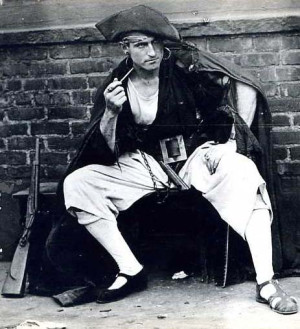
Don Dickerman was an artist, entrepreneur and a noted personality in the Greenwich Village community of the late 1910s and 1920s. Dickerman continued a long career after the journey as an entrepreneur, with pirate themed clubs in multiple U.S. cities.


Otis_Skinner_&_Ruth_Rose_in_PietroRuth Rose

Ruth Rose was a former stage actress. She served multiple roles for William Beebe, but chiefly was an recorder, historian and wrote about the journey for Beebe, authoring several chapters in his books. [Image: Ruth Rose with Otis Skinner in Pietro, Criterion Theater, 1920]


Ernest SchoedsackErnest Schoedsack

Ernest Schoedsack upgraded the Department of Tropical Research’s film capability to a full documentarian’s level, serving as cinematographer. The year after the journey, Ruth Rose and Schoedsack married, and she joined him in filmmaking, working as a screenwriter. He was an established documentarian, but went on to make King Kong (1933), Mighty Joe Young (1949), and other films. [Image: Ernest Schoedsackvii]


Jay Pearson 1925Jay F. W. Pearson

Jay F. W. Pearson was a 23-year-old ichthyologist who later was the second president of the University of Miami (1952-62). His expedition title was “Assistant in Microplankton”.

William K. Gregory

Dr. William K. Gregory was noted as “Associate in Vertebrates”. He was with the American Museum of Natural History in New York, and also taught at Columbia.

Gregory BatesonGregory Bateson

Gregory Bateson was British, a 20-year-old, freshly degreed in biology from Cambridge, who later was noted for his work in Anthropology, and studied by most undergraduate anthropology majors. [Image: Gregory Batesonviii]

Serge Chetyrkin

Serge Chetyrkin was an immigrant from Russia, who joined as the taxidermist and “preparateur”. Isabel wrote: “The old Russian…Eats no meat, eggs, milk or butter. Used to act like that last year in South America, but we thought it was just his little way of avoiding monkey stew.” The real reason, she noted, was that the expedition’s perishables were in an increasingly unreliable chiller.

Lillian Segal

Dr. Lillian Segal was a biological chemist. She was on the trip “for the specific purpose of studying the methods by which the light [of deep sea fish] was produced…”x. Her expedition job title was “Assistant in Special Problems.” [Image: Dr. Lillian Segal (L) with Mrs. C. J. Fish, inspect the fruits of a dredgingix]

Marie Poland Fish

On the staff list for the Arcturus expedition, Marie Poland Fish is listed as “Assistant in Larval Fish,” though her husband C. J. Fish was on the ship, she was a marine scientist in her own right.

C. J. Fish

Dr. Fish was “Associate in Diatoms and Crustacea,” on loan from the United States Bureau of Fisheries.

D. W. Cady

Cady was the expedition’s doctor, but participated also in the exploring and collecting. Isabel Cooper wrote that he let her help with some of the ministering to cuts and scrapes the staff got during their work.

DBPutnam St Lucie Co Hist SocDorothy Putnam

Dorothy B. Putnam, the wife of Beebe’s publicist George Palmer Putnam, and her 12-year-old son David, joined the expedition in Panama for its exploration of the Galapagos Islands, Cocos, and the Humboldt Current in the Pacific. They were noted as among a small number of “Guests of Honor” who joined for part of the journey. [Image: Dorothy Putnam]


David B. Putnam

David Putnam, was the son of Dorothy and George Palmer Putnam. His publisher father sent him on the journey in part so he could publish a children’s account by David, which was published soon after the trip as David Goes Voyaging. [Image: David B. Putnam from David Goes Voyaging]


i Letter IC to CDM, February 18, 1928.

ii William Beebe, Galapagos: World’s End, 1924.

iii David Binney Putnam, David Goes Voyaging, New York, G. P. Putman and Sons, 1925, p. 7.

iv Letter, IC to CDM, February 13, 1925.

v Image from askart.com

vi David Binney Putnam, David Goes Voyaging, New York, G. P. Putman and Sons, 1925, p. 7.

vii Image: Findagrave.com

viii Image: http://www.genmedhist.info/reports/bateson_album/3200.jpg/view 

ix Wild Things, Blog of the World Conservation Society, www.wcsarchivesblog.org

x The Literary Digest, Vol. 86, 1925


“I let too many girl pictures get by me”

This entry is post 5 of 21 in the ongoing series Isabel Cooper

Rising to a crescendo with the Arcturus Expedition in 1925, press stories spilled out about the women naturalist William Beebe had with him on his Department of Tropical Research expeditions. George Palmer Putnam, who headed the Putnam publishing company, led in driving publicity for Beebe, and he was good at it. He was married to a strong, independent woman himself, and later promoted, and then also married Amelia Earhart. Both men recognized the value and potential of women.

Beebe women staff 072124 B Daily Eagle
Brooklyn Daily Eagle, July 21, 1924

The wrong kind of publicity?

In early 1925, the publicity for Beebe may have gone too far, making his work look less than scientific. One researcher, Gary Kroll, interpreted exchanges between Beebe and Putnam as showing Beebe was upset, or at least that George Putnam thought so:

“The extent to which Beebe made [the Arcturus sensationalism] an issue is unclear. Beyond doubt, however, was Putnam’s almost paranoid perception of Beebe’s concern. As the Arcturus neared home, Putnam sent a telling letter to Beebe that describes to what lengths the two might have gone to preserve the professional representation of the expedition.”

‘You are tremendously nice in your attitude towards me in this whole matter and I appreciate it. I know perfectly well that often I blunder and do things which don’t altogether please you. But in the long run I think you are in reasonably good hands. In the first place, I grant that I let too many girl pictures get by me in that first batch and I know you didn’t like it. Anyway, henceforward the feminine element has been soft-pedaled satisfactorily. Perhaps we will smuggle say Dorothy and David and one girl ashore in the tug. If that does not prove practicable I think a stern order should go out from you, the commander, that the women are to be as little in evidence as possible at the landing. Certainly that none of them is to talk beyond the absolute necessities. The girls should say to the reporters ‘Dr. Beebe will give out all the information.’ And then poor Dr. Beebe, whether he wants to or not, will have to calmly take half an hour and sit down with the reporters and answer every damn question they want to ask. You may as well face the realization of that necessity. And then the young ladies can all disburse in their several directions and we will all be there to cooperate in soft pedaling them as much as can be. Not that there is anything reprehensible in it, but that from your standpoint is wisdom.’i

Gary Kroll took this letter at face value, but it looks more like Putnam was exaggerating, or having a bit of fun. Most signs in Beebe’s actions and further publicity and publishing show that he not only held high the accomplishments of his women’s staff, he celebrated them, with exhibitions of Cooper’s art, and chapters in his books by Ruth Rose. They did not sneak the women (and the boy, David Putnam) ashore.

i Gary Kroll, Exploration in the Mare Incognita: Natural History and Conservation in Early-Twentieth Century America, PhD. dissertation, University of Oklahoma, Norman Oklahoma, 2000, p. 212.

Follow by Email
Instagram